Toe Walking in Children: Habit or Red Flag?
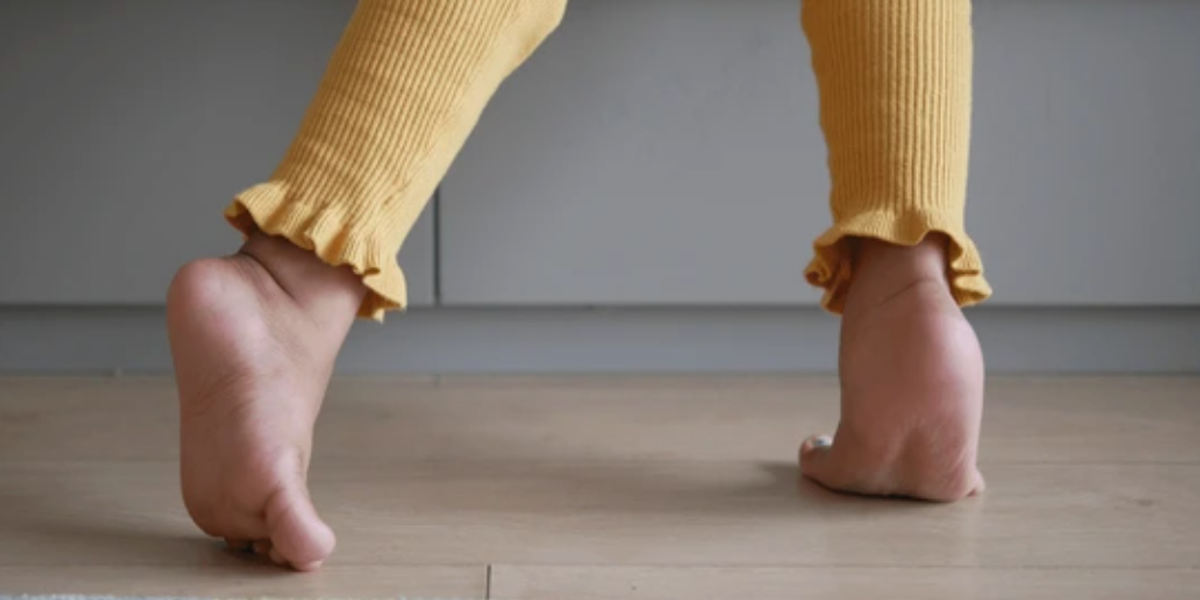
Many toddlers walk on their toes when learning to walk, and in most cases, it resolves naturally. However, when toe walking persists beyond early childhood, it may indicate underlying neuromuscular, sensory, or developmental issues that benefit from early physiotherapy assessment.
What Is Toe Walking?
Toe walking refers to a walking pattern where a child:
- Walks on the balls of their feet
- Avoids heel contact with the ground
- May appear stiff or bouncy while walking
It can be seen in one or both feet.
When Toe Walking Is Normal
Toe walking is commonly considered normal when:
- It appears during early walking (under 2-3 years)
- The child can walk flat-footed when prompted
- There are no other developmental concerns
This is often termed idiopathic toe walking.
When Toe Walking May Be a Red Flag
Persistent toe walking may signal:
- Tight calf muscles or Achilles tendon
- Sensory processing differences
- Motor coordination delays
- Autism spectrum conditions
- Cerebral palsy or neuromuscular disorders
A thorough assessment helps rule these out.
Why Early Intervention Matters
If untreated, persistent toe walking can lead to:
- Muscle tightness and joint restrictions
- Balance difficulties
- Altered gait mechanics
- Pain or fatigue during walking
Early rehab improves outcomes significantly.
How Physiotherapy Helps
Physiotherapy focuses on:
- Stretching tight muscles
- Strengthening lower limb muscles
- Gait retraining and heel strike awareness
- Sensory integration strategies
- Parent-guided home programs
The goal is functional, comfortable walking-not forceful correction.
The Role of Sensory and Motor Feedback
Many children toe walk due to reduced body awareness. Feedback-driven exercises:
- Improve foot placement awareness
- Encourage heel contact
- Make therapy engaging and playful
This increases participation and consistency.
Tracking Progress Objectively
Small changes in gait can be difficult to notice day-to-day. Objective tracking helps:
- Monitor improvement
- Adjust interventions
- Reassure parents
Progress becomes visible and measurable.
Final Takeaway
Toe walking isn’t always a concern-but persistent patterns deserve attention.With interactive gait training and measurable feedback, ROPODS’ SPOT supports early, child-friendly intervention for healthier walking patterns.
Ready to Transform Your Rehab Practice?
See how ROPODS SPOT can help you engage patients and drive better outcomes. Book a demo today and experience the future of rehabilitation technology.
Related Articles
 Physical Therapy
 Physical Therapy
 Physical Therapy